Summer to fall transition nails solve a very specific manicure dilemma: the weather still feels warm, but bright tropical polish no longer matches the mood. It is also too early for an entirely dark, wintry manicure.
The answer is not to choose one season. Combine them. Keep the translucency, brightness, or playful detail of summer, then introduce the muted colors, warmth, and depth associated with fall.
These 17 ideas include understated looks, richer colors, short-nail options, and salon-level artwork. You will also find suitable shapes, lengths, difficulty levels, and clear language to use at your next appointment.
The best summer to fall transition nails combine a light summer element with a warmer or more muted autumn detail.
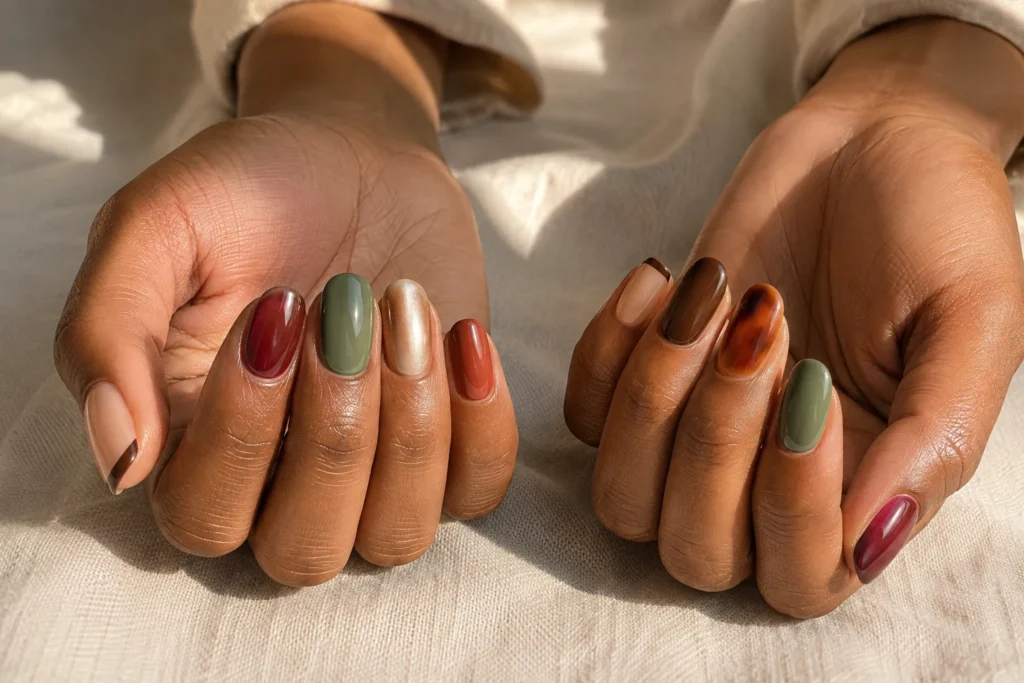
Table of Contents
Table of Contents
What Makes Summer to Fall Transition Nails Work?
Summer to fall transition nails work because they introduce seasonal depth gradually instead of changing immediately to very dark colors.
The easiest formula is one summer element plus one fall element.
For example, pair a sheer pink base with chocolate tips, soften bright green into sage, replace cherry nail art with a translucent berry wash, or add a warm chrome finish to a peach manicure.
The change can come from:
- Color: lemon becomes butter yellow; pink becomes mauve.
- Depth: transparent berry replaces opaque burgundy.
- Finish: bright cream receives an amber or champagne glaze.
- Placement: dark brown appears only on a French tip.
- Artwork: summer florals shift toward rust, olive, and muted gold.
If you want inspiration that leans further into September, browse these September nail ideas. For a distinctly autumnal result, the site’s fall nail design guide offers deeper colors and more seasonal details.
Best Colors for Summer to Fall Transition Nails
Choosing summer to fall transition nails becomes easier when you begin with a familiar summer shade and select its warmer autumn alternative.
| Summer starting point | Transitional alternative | Effect |
|---|---|---|
| Lemon yellow | Butter or ochre yellow | Warm and cheerful |
| Hot pink | Dusty rose or berry jelly | Feminine but less summery |
| Mint green | Sage or olive | Soft and earthy |
| Sky blue | Muted denim blue | Cool without looking tropical |
| Bright orange | Terracotta or burnt orange | Warm and autumnal |
| White | Milky ivory or pearl | Light but more refined |
| Nude | Caramel, latte, or taupe | Neutral with seasonal warmth |
These are guides rather than rules. A bright shade can still work if it is limited to a tip, swirl, aura center, or small accent.
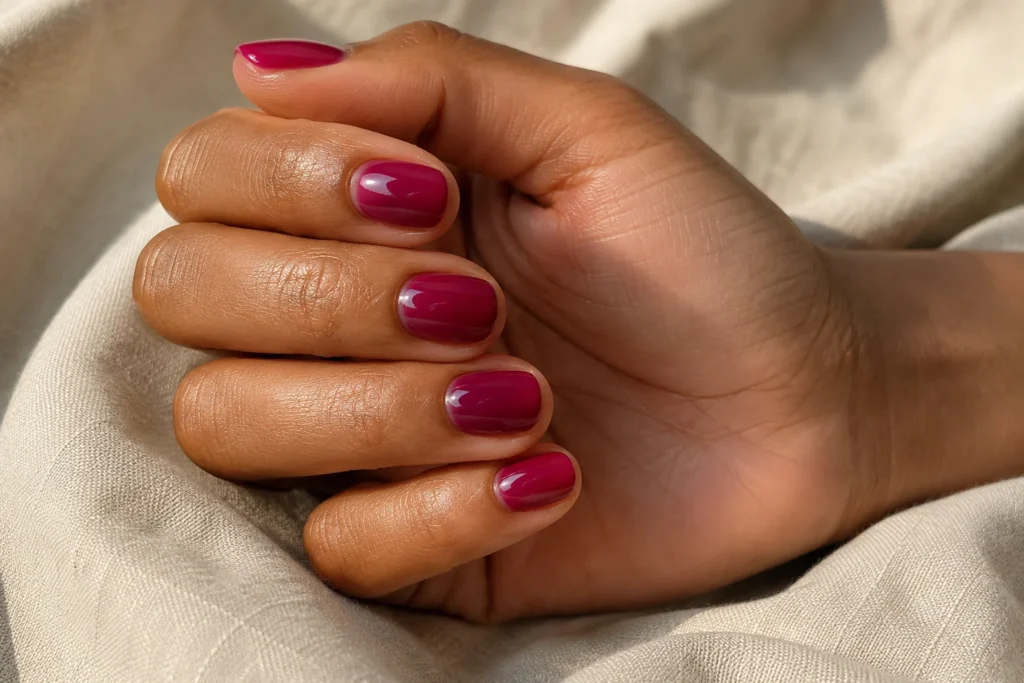
1. Berry jelly nails
Translucent berry is one of the simplest ways to carry summer’s juicy color into early fall. The finish stays light and glassy, while raspberry, cranberry, or soft plum introduces autumnal depth.
Use two thin layers so the natural nail remains faintly visible. Short oval and medium almond shapes both suit the look.
Best for: Minimalists who still want visible color
Difficulty: Easy
Ask for: “A translucent cranberry jelly manicure with a very glossy finish.”
These summer to fall transition nails are especially suitable for anyone who wants rich color without an opaque burgundy manicure.
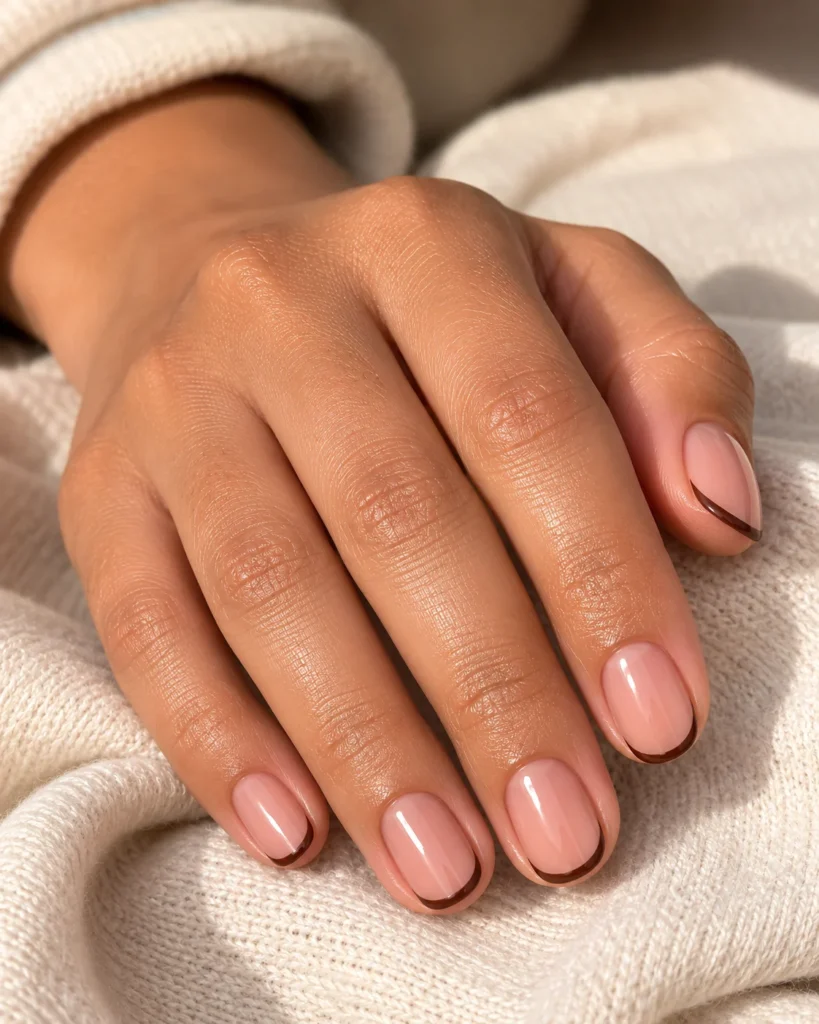
2. Chocolate micro-French tips
Chocolate tips introduce brown without making the whole manicure feel dark. Keep the base sheer pink-beige and the French line exceptionally thin.
This design works particularly well on short oval, squoval, or medium almond nails. A warm cocoa creates a softer result than an almost-black espresso.
Aesthetic: Polished, understated, quiet luxury
Difficulty: Moderate
Ask for: “A sheer neutral base with hairline chocolate French tips following my natural free edge.”
Chocolate micro-French tips are among the most wearable summer to fall transition nails for short natural nails.
Readers who prefer elegant, wearable manicures can find related inspiration in these classy nail designs.
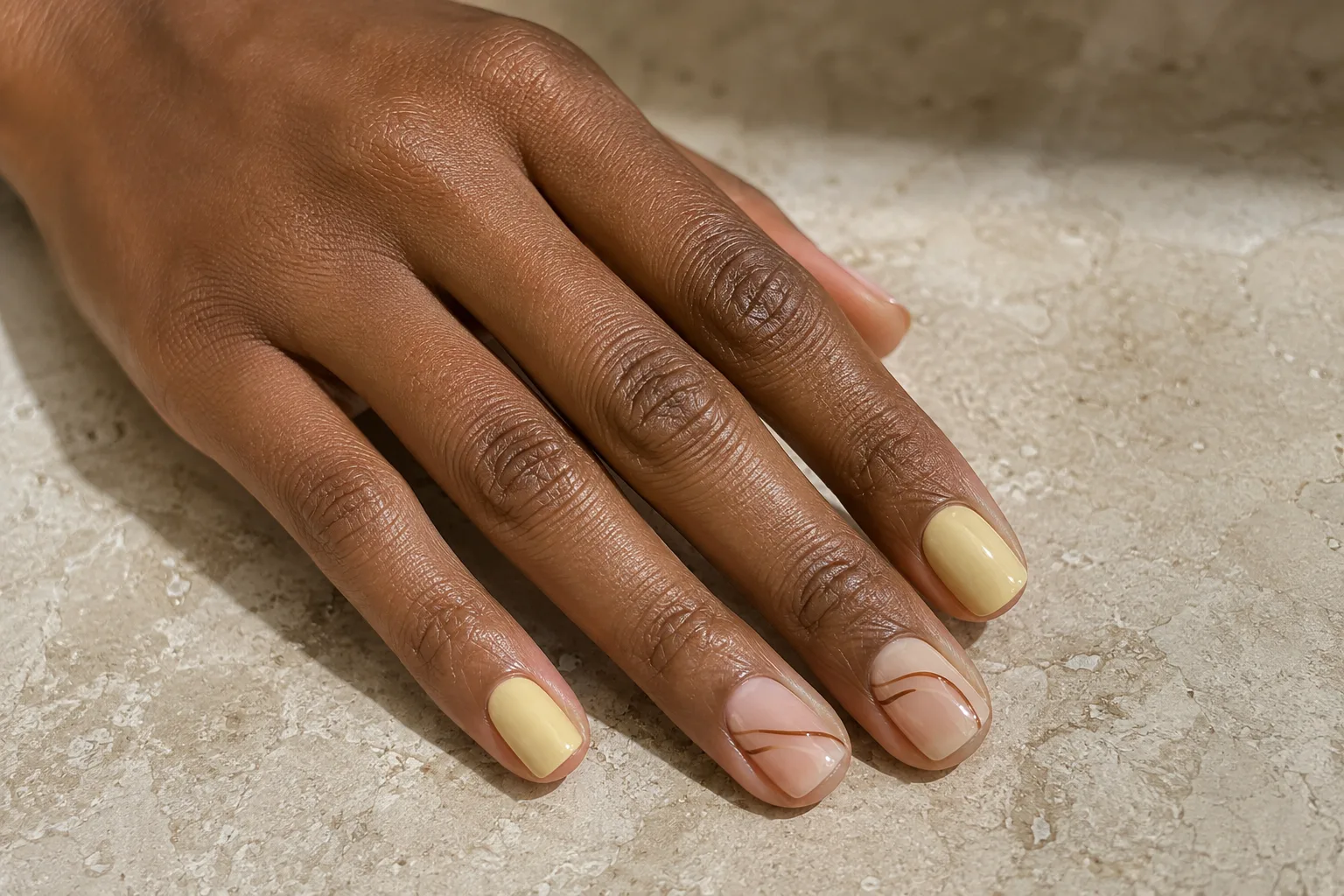
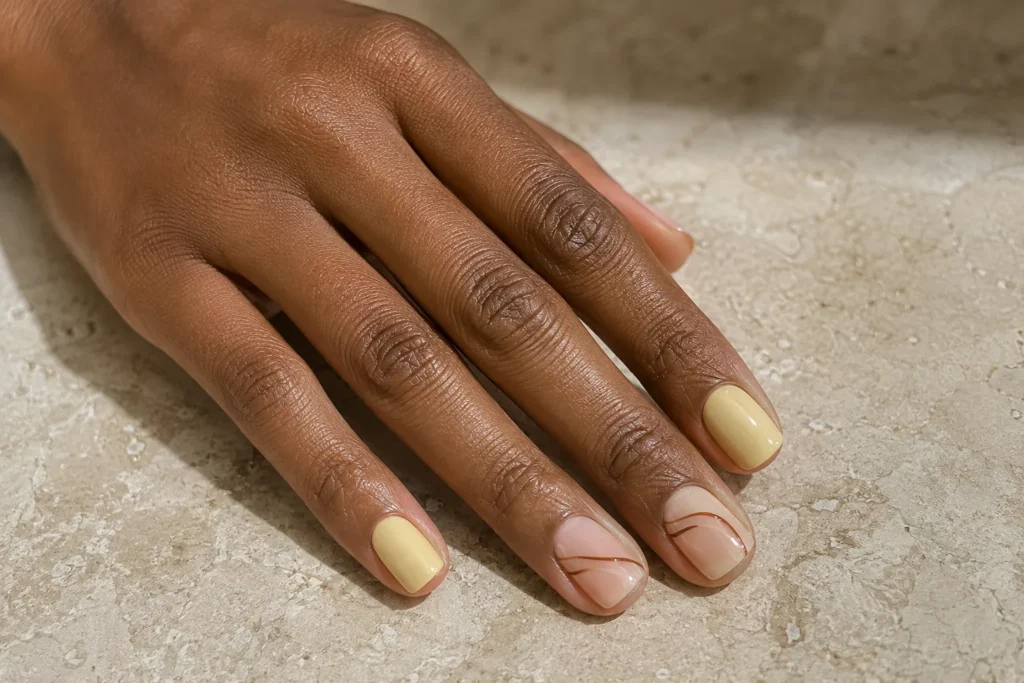
3. Butter yellow with caramel accents
Butter yellow preserves the warmth of August while caramel adds the first hint of fall. Paint most nails creamy yellow, then use caramel for one accent, a fine curve, or small abstract shapes.
Avoid vivid neon yellow. The combination looks most sophisticated when both shades have warm, softened undertones.
Best shape: Short square or squoval
Best length: Short
Difficulty: Easy to moderate
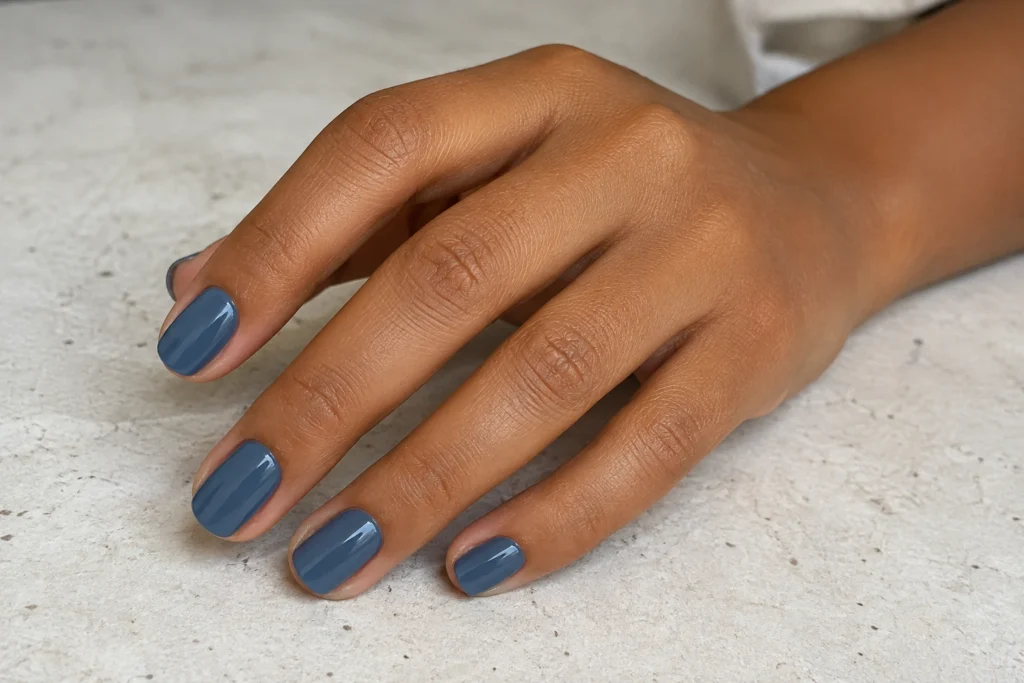
4. Muted denim-blue nails
Denim blue is the calmer relative of summer cobalt. Its gray undertone makes it suitable for cooler days without becoming navy.
Wear it as a solid glossy manicure or pair it with a translucent nude accent nail. A short squoval shape gives the color a clean, practical character.
Best for: Cool-color lovers
Aesthetic: Casual and modern
Ask for: “A medium muted denim blue with a gray undertone—not cobalt or navy.”
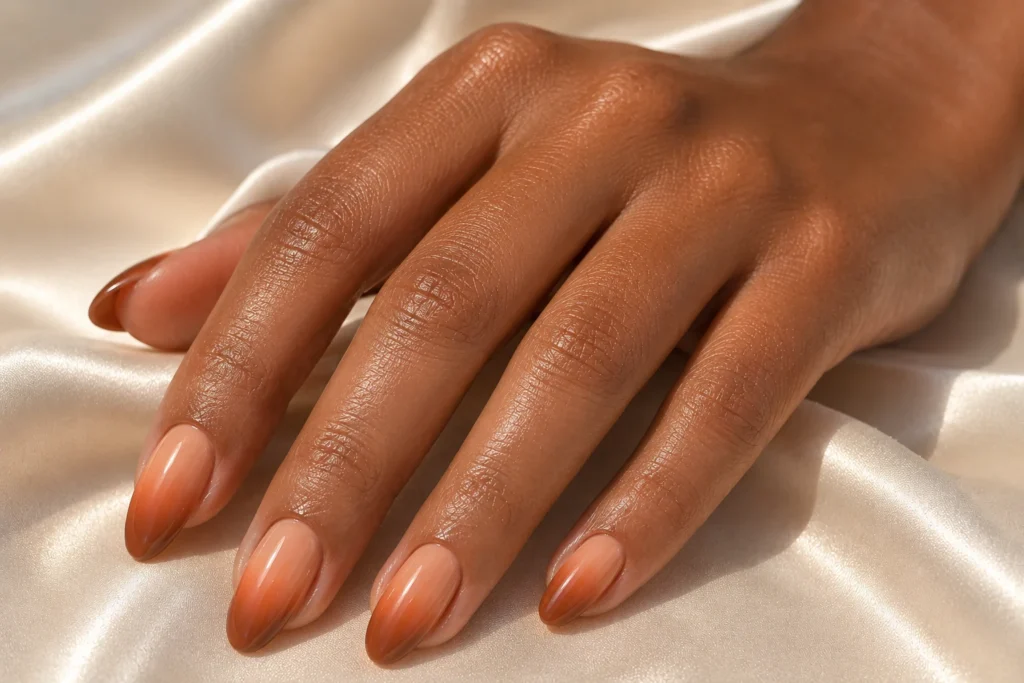
5. Peach-to-cinnamon ombré
This gradient begins with soft peach near the cuticle and develops into cinnamon at the tip. It resembles the shift from late-summer sunlight to warm autumn spice without relying on obvious seasonal artwork.
The smooth blend needs enough surface area, so medium oval or almond nails work best.
Finish: High gloss
Difficulty: Advanced
Salon note: Request an airbrushed transition with no visible dividing line.
6. Sage and olive color-block nails
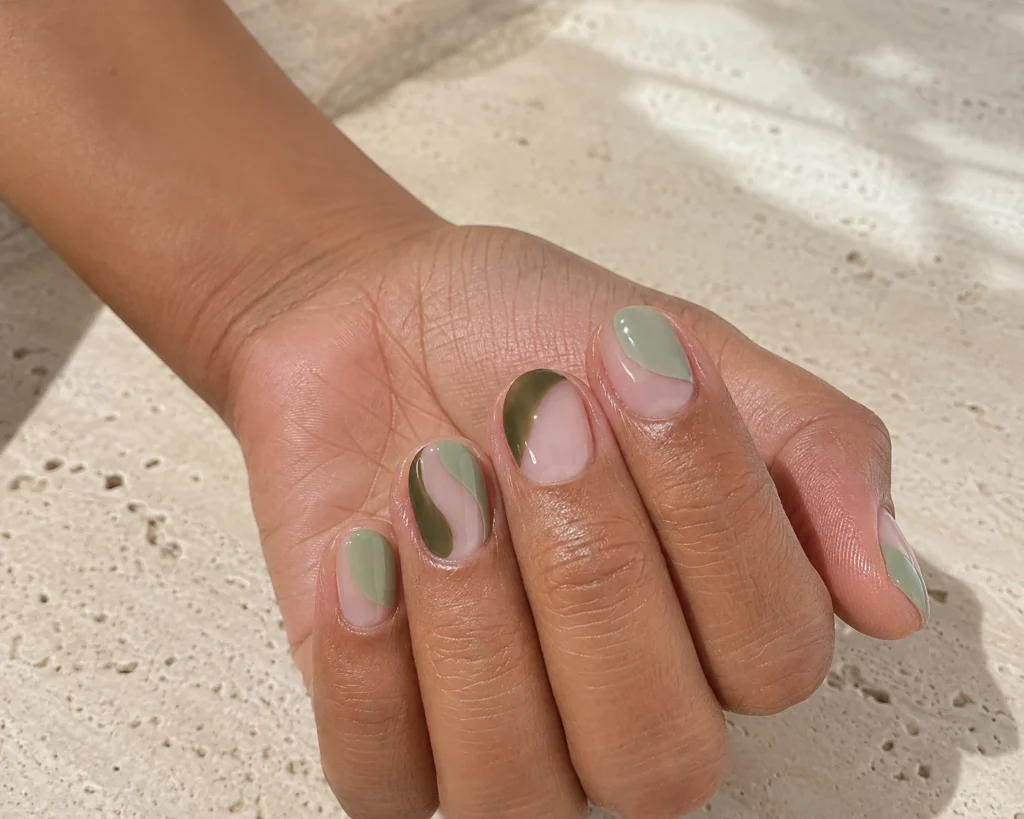
Sage represents summer greenery; olive provides earthy fall depth. Combine them in curved blocks, alternating French tips, or a restrained mismatched manicure.
Leave part of the nail translucent to keep the palette from appearing heavy. This is also an easy way to adapt green polish to short nails.
Aesthetic: Organic and contemporary
Difficulty: Moderate
Ask for: “Muted sage and olive curved color blocks over a sheer nude base.”
Green summer to fall transition nails look freshest when sage is balanced with warmer olive rather than very dark forest green.
7. Caramel glazed nails
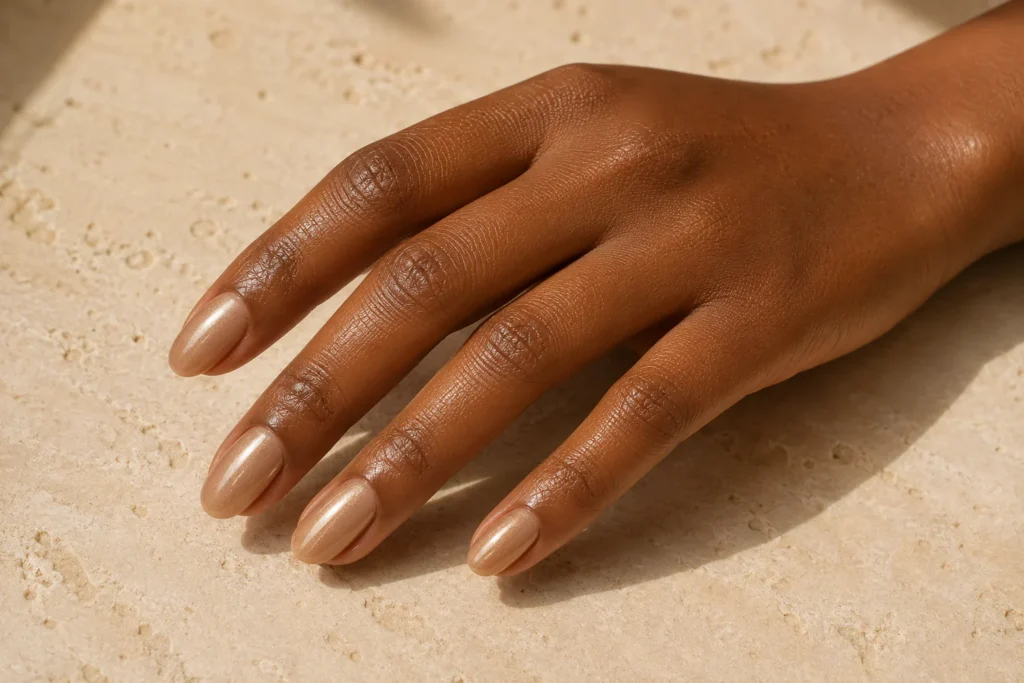
Caramel glaze combines a warm beige-brown foundation with fine pearl luminosity. It looks richer than a summer nude but lighter than solid chocolate.
Choose a champagne or warm pearl overlay rather than icy silver chrome. The finished surface should glow softly instead of looking metallic.
Best shape: Almond or oval
Best length: Short to medium
Aesthetic: Luminous and luxurious
Caramel summer to fall transition nails complement neutral wardrobes while remaining light enough for warm August weather.
8. Tortoiseshell French tips
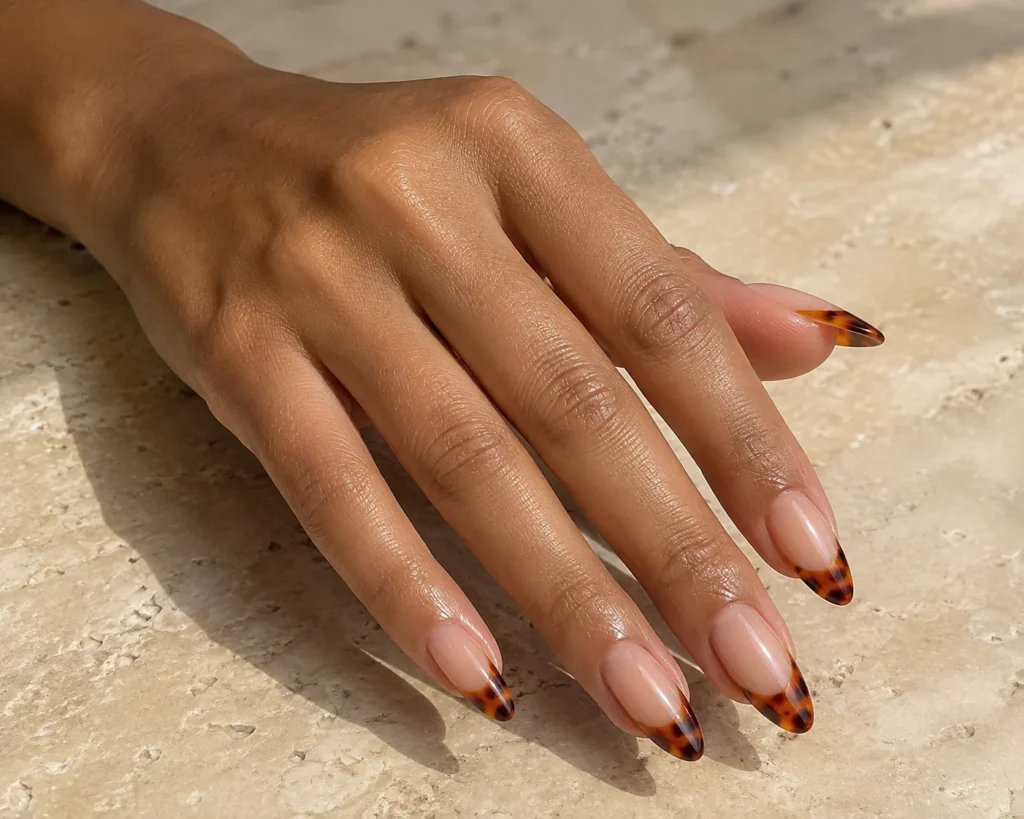
Full tortoiseshell can feel distinctly autumnal, but limiting the pattern to French tips keeps the manicure airy. Use translucent amber, caramel, and irregular espresso markings over a neutral base.
This is a layered technique; opaque brown spots will look flat. Bring a close reference image and request visible amber depth.
Best for: Statement details without a full-art manicure
Difficulty: Advanced
Ask for: “Layered translucent tortoiseshell French tips with amber showing between the darker markings.”
Tortoiseshell summer to fall transition nails feel lighter when the amber pattern is limited to the tips.
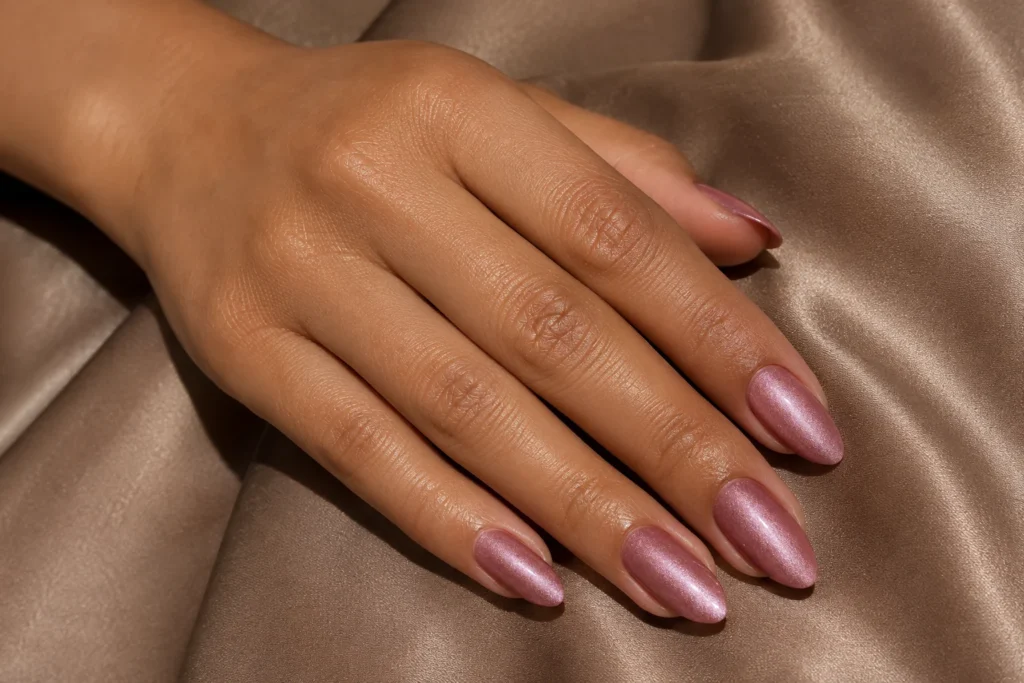
9. Dusty rose velvet nails
Dusty rose takes summer pink in a softer, more muted direction. A magnetic velvet finish creates movement and dimension without requiring painted artwork.
Medium almond nails display the reflective line beautifully, although a subtle velvet effect can also make short nails look dimensional.
Aesthetic: Romantic and evening-ready
Difficulty: Salon recommended
Avoid: Bright bubblegum pink or chunky glitter
10. Terracotta aura nails
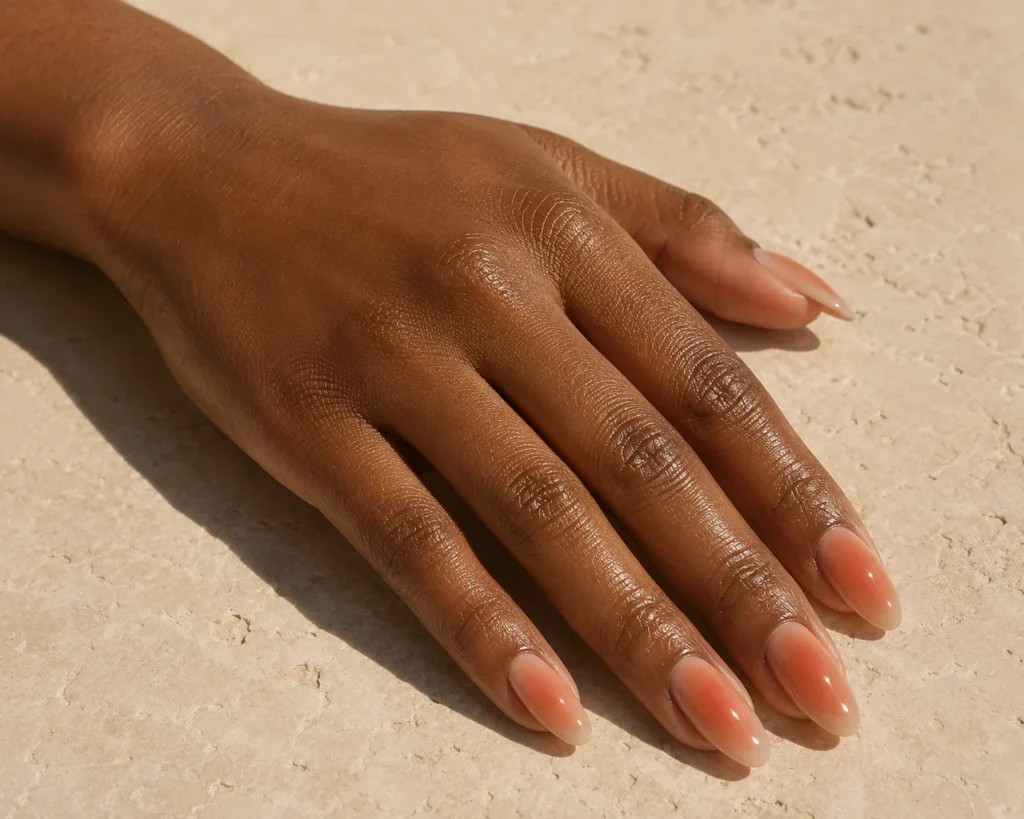
A diffused terracotta center over a translucent nude base feels warm but not overtly autumn-themed. The aura should fade softly toward the edges, with no hard circle.
For a final trace of summer, add a faint peach glow beneath the terracotta. Keep embellishment minimal so the gradient remains the focus.
Best shape: Almond
Best length: Medium
Ask for: “A softly airbrushed peach and terracotta aura with a glossy, translucent finish.”
11. Milky ivory with amber chrome
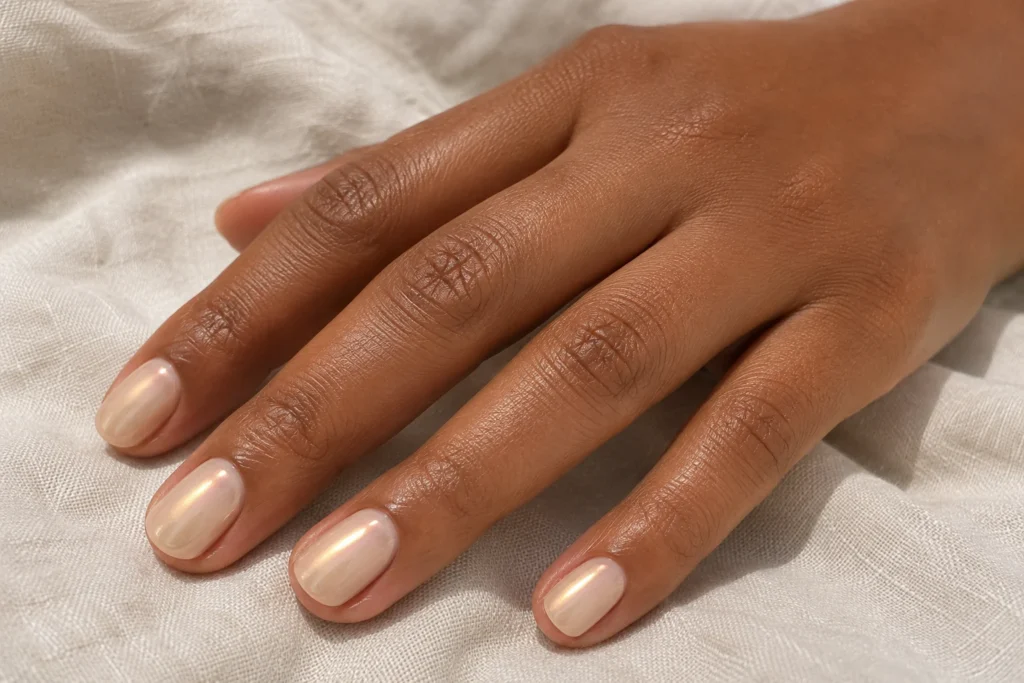
Milky ivory provides the clean brightness of summer, while a sheer amber glaze adds golden warmth. Unlike heavy mirror chrome, this finish should remain translucent and pearlescent.
It is a useful choice for weddings, work, or readers who do not normally wear dark polish.
Difficulty: Moderate
Aesthetic: Clean and elegant
Best length: Any
12. Forest-green micro-French
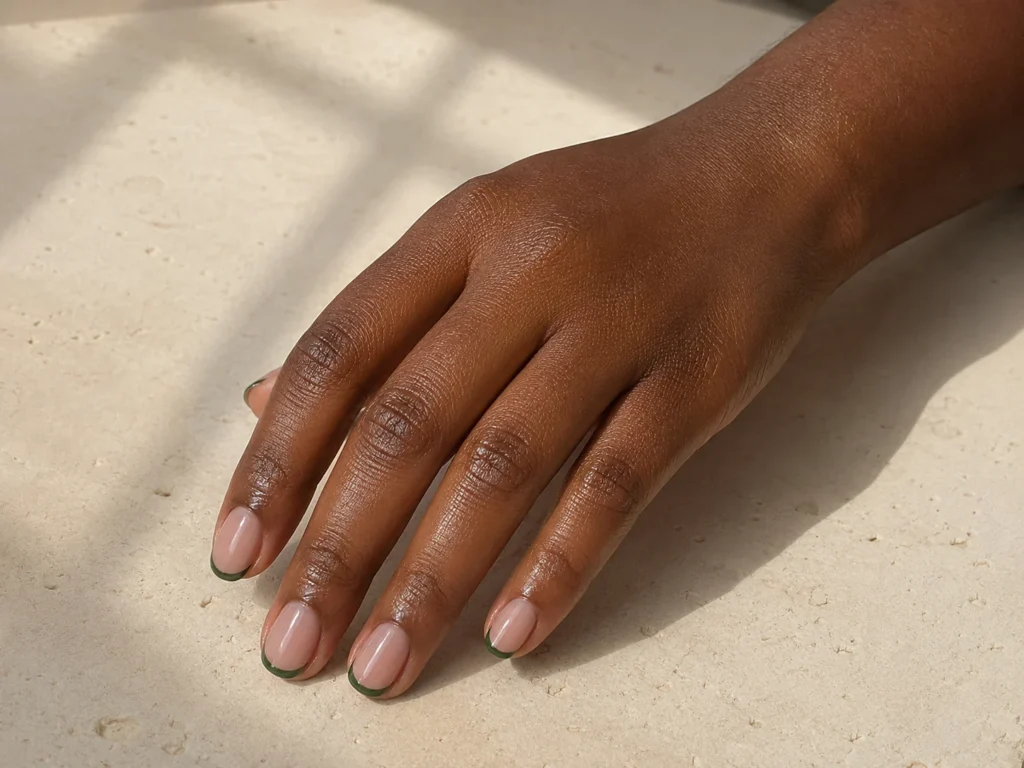
Forest green may feel too dark as a solid August manicure, but a narrow French edge offers the right amount of contrast. Use a sheer nude base and follow the nail’s natural curve.
Short oval nails keep it subtle; medium almond nails make it more dramatic. A tiny champagne outline can be added beneath the green on one or two accents.
Best for: Minimalist early-fall color
Difficulty: Moderate
Avoid: Thick tips that visually shorten the nail
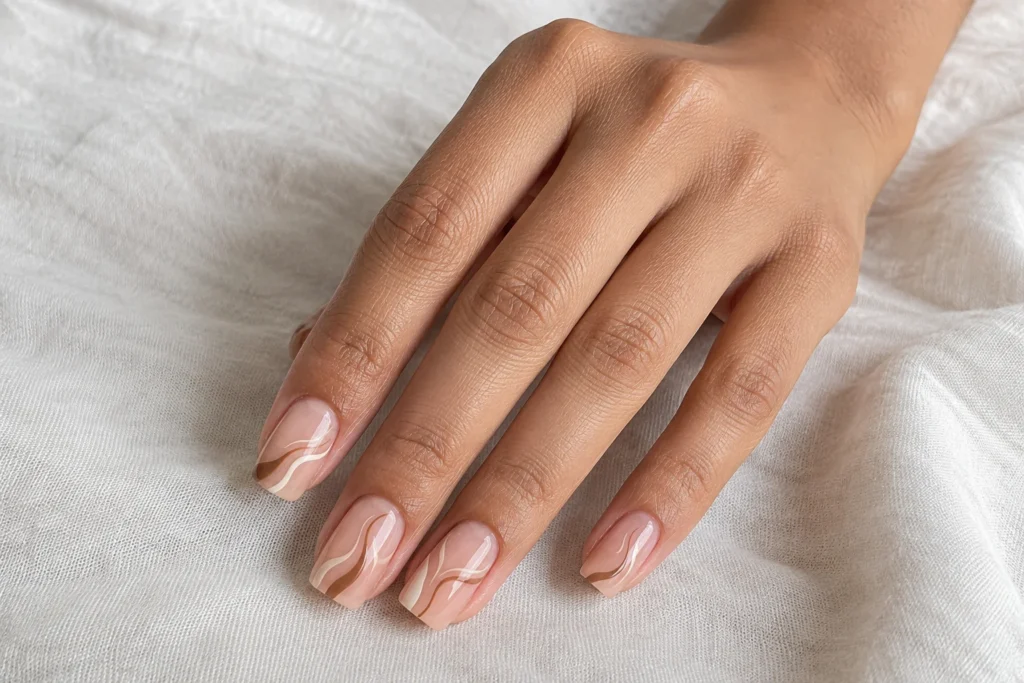
13. Latte swirl nails
Cream, beige, and light coffee-brown lines create a soft transitional palette. Unlike dense marble, latte swirls should contain generous negative space and only a few flowing lines.
Use the design on two or three nails and keep the others creamy beige. This prevents the set from becoming visually busy.
Best shape: Oval, almond, or squoval
Difficulty: Moderate
Ask for: “Fine cream and latte swirls with plenty of sheer negative space.”
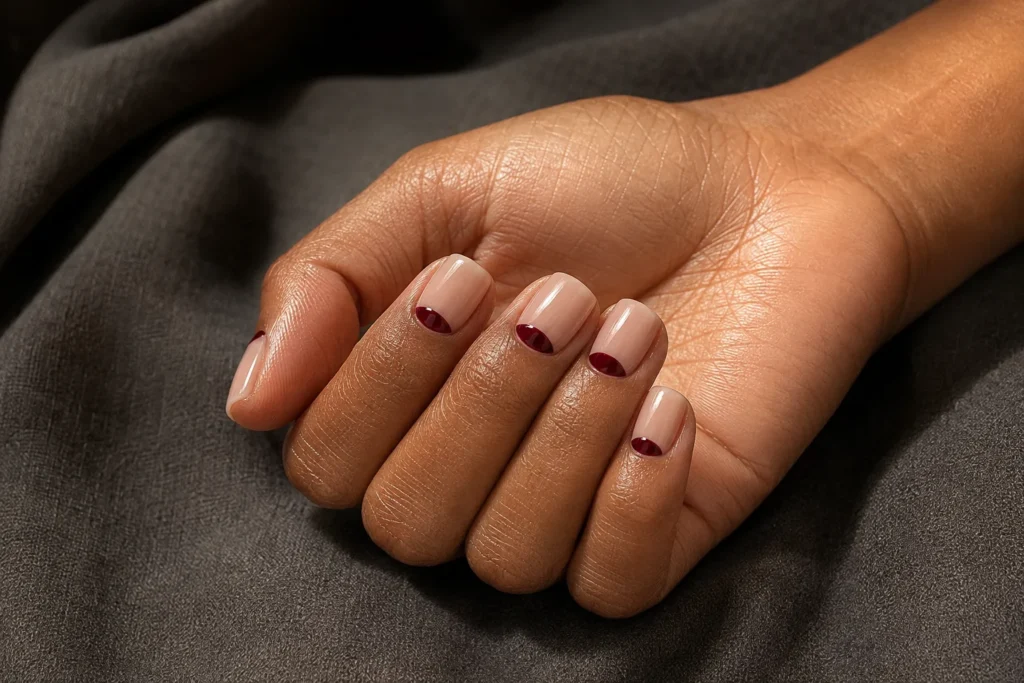
14. Burgundy half-moons
Instead of covering every nail in burgundy, place the color in slim half-moons near the cuticle. The exposed neutral base keeps the manicure lighter and allows attractive grow-out.
A glossy finish makes the rich red look fresh; matte burgundy can feel more appropriate later in autumn.
Best for: Office and evening wear
Best length: Short to medium
Difficulty: Moderate
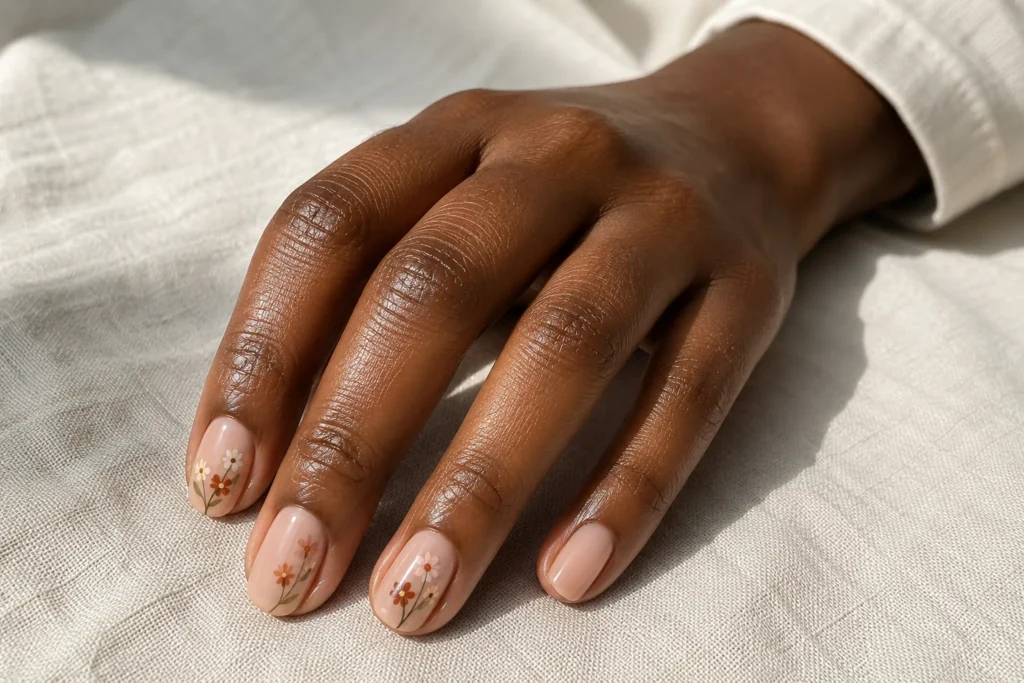
15. Muted floral nails
Florals can transition into fall when their palette changes. Replace bright daisies with tiny rust, cream, dusty rose, and olive details over a sheer nude base.
Use the flowers on no more than two or three nails. They should look delicate and botanical, not crowded or cartoonish.
Aesthetic: Romantic and artistic
Difficulty: Advanced
Ask for: “Sparse miniature florals in rust, cream, dusty rose, and olive with abundant negative space.”
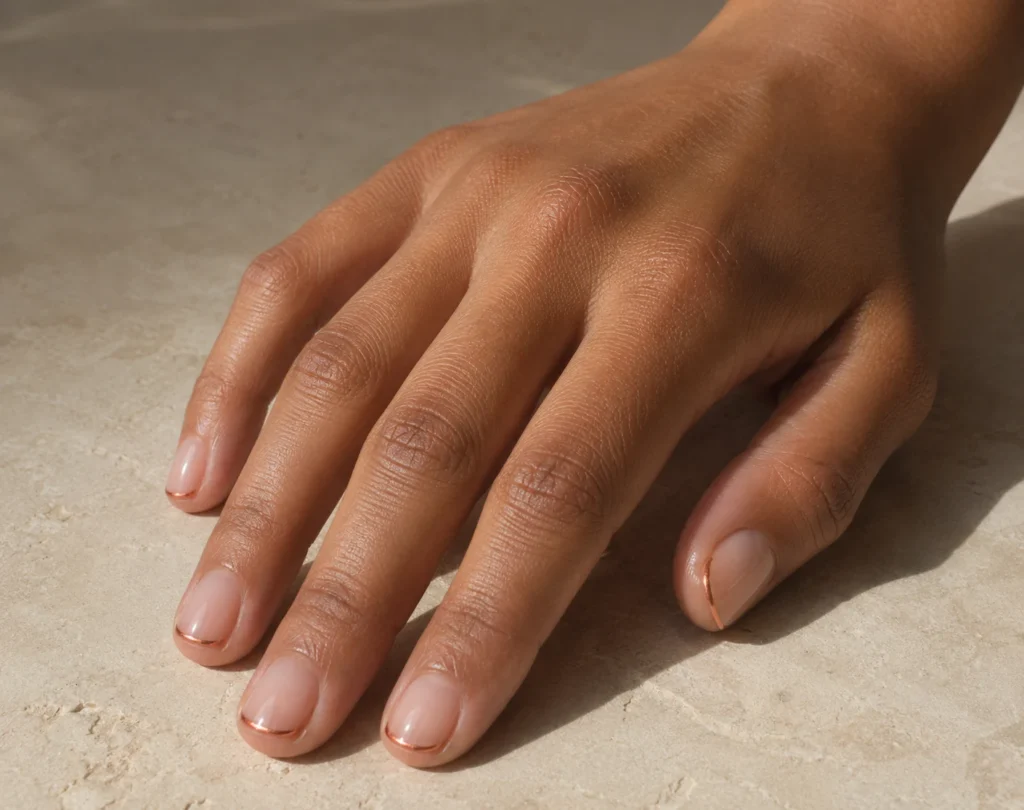
16. Copper-edged nude nails
Begin with translucent beige or pink-beige and add an extremely narrow copper line along the tip or one side of each nail. Copper reflects late-summer light while introducing the metallic warmth of fall.
This idea is easier to wear than full chrome and works on very short nails.
Best shape: Short oval or squoval
Aesthetic: Minimal and modern
Difficulty: Moderate
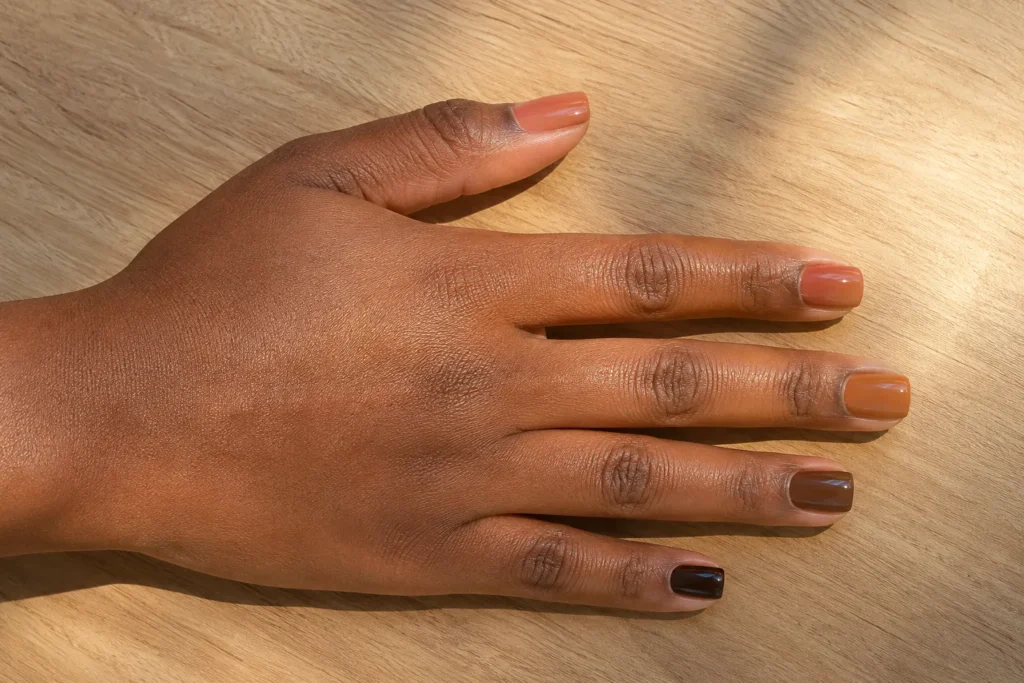
17. Sunset-to-mocha mismatched nails
This curated set uses peach, muted coral, caramel, cocoa, and mocha—one related shade per nail. It resembles a sunset palette gradually deepening into coffee brown.
The colors need consistent undertones and the same glossy finish to look cohesive. Keep every nail solid rather than adding competing patterns.
Best for: Color lovers and indecisive clients
Best shape: Short rounded square
Difficulty: Easy
Ask for: “A tonal Skittle manicure progressing from muted peach through caramel to mocha.”
How to Choose Summer to Fall Transition Nails Design
The right summer to fall transition nails should suit your natural nail length, daily routine and preferred level of maintenance.
| Your preference | Best choices |
|---|---|
| Very short natural nails | Copper-edged nude, denim blue, butter yellow, berry jelly |
| Minimalist manicure | Chocolate micro-French, forest-green tips, milky amber glaze |
| Soft feminine style | Dusty rose velvet, muted florals, peach-cinnamon ombré |
| Earthy aesthetic | Sage and olive blocks, tortoiseshell tips, terracotta aura |
| Easy DIY manicure | Berry jelly, denim blue, tonal sunset-to-mocha |
| Salon statement | Tortoiseshell French, velvet nails, ombré, aura nails |
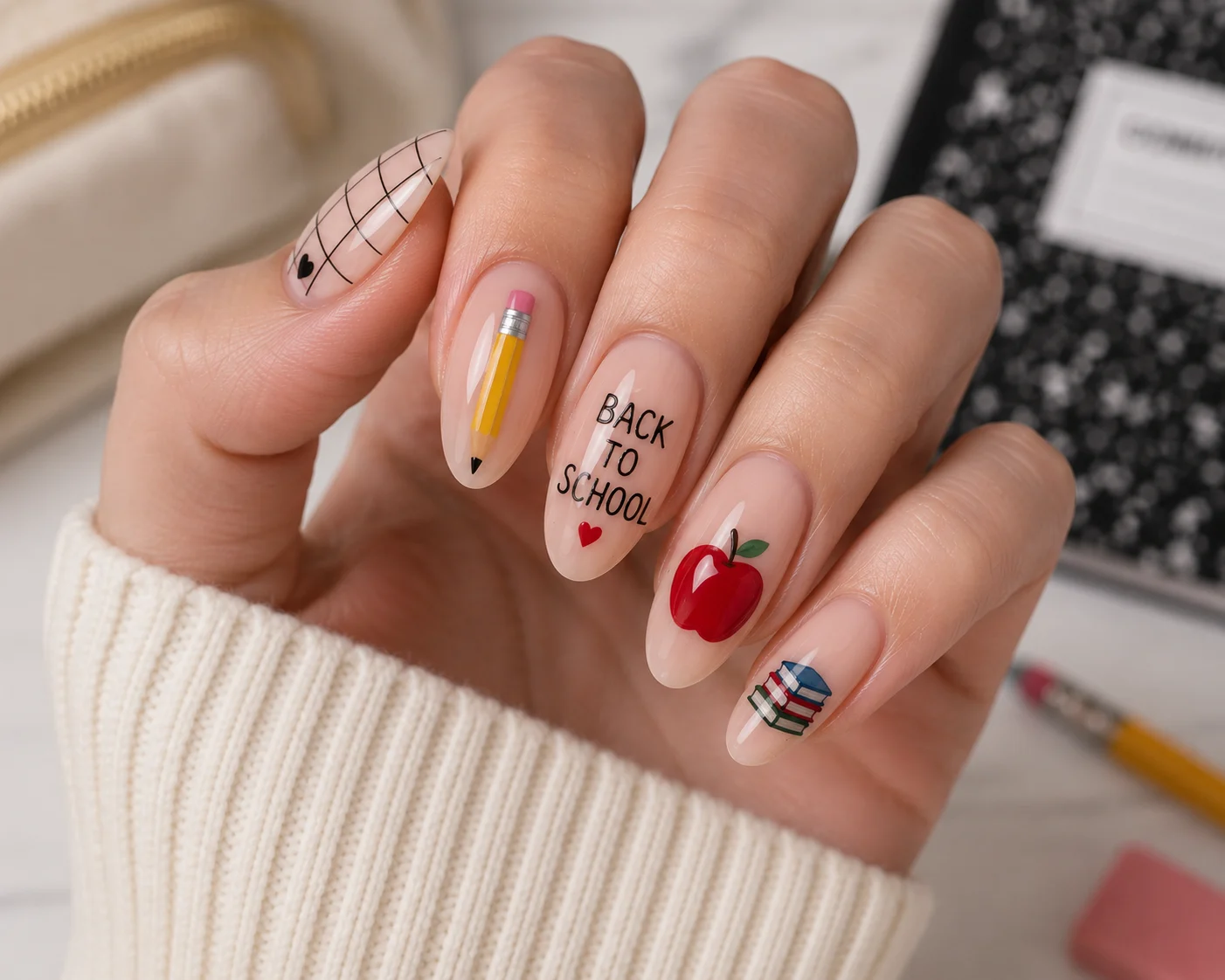
For students or anyone returning to a busier routine, the practical shapes in these back-to-school nail designs offer additional short, wearable options.
How to Make Summer to Fall Transition Nails Last Longer
Caring for summer to fall transition nails begins with careful preparation, thin polish layers and regular moisturizing.
Prepare the nail carefully, but do not aggressively remove living skin. The American Academy of Dermatology advises against cutting or forcefully pushing back cuticles because they help protect the nail area from infection; its manicure safety recommendations also explain what to check when visiting a salon.
For regular polish:
- Begin with clean, dry nails.
- Apply one thin base coat.
- Add two thin coats of color.
- Finish with top coat and seal the free edge.
- Wear gloves for prolonged cleaning or dishwashing.
- Moisturize the nails and surrounding skin regularly.
OPI’s professional polish application guide similarly recommends a base coat, two color coats, and a top coat, allowing each layer to dry properly.
If using a gel system at home, follow the manufacturer’s complete product-and-lamp instructions. The British Association of Dermatologists warns that uncured gel touching the skin can increase the risk of allergy and recommends using the specified curing lamp; read its gel nail allergy guidance before working with at-home kits.
Final thoughts
The most successful summer to fall transition nails do not rush the season. They preserve something airy, colorful, or luminous from summer while adding a carefully chosen autumn element.
Start with the color you already enjoy. Mute it, deepen it slightly, pair it with brown or olive, or use a richer shade only on the tip. Whether you choose simple berry jelly or detailed tortoiseshell French tips, the result should feel appropriate now—not like a manicure waiting for the weather to catch up.
Ultimately, summer to fall transition nails should feel like a gradual change in color and mood rather than an abrupt jump into a new season.