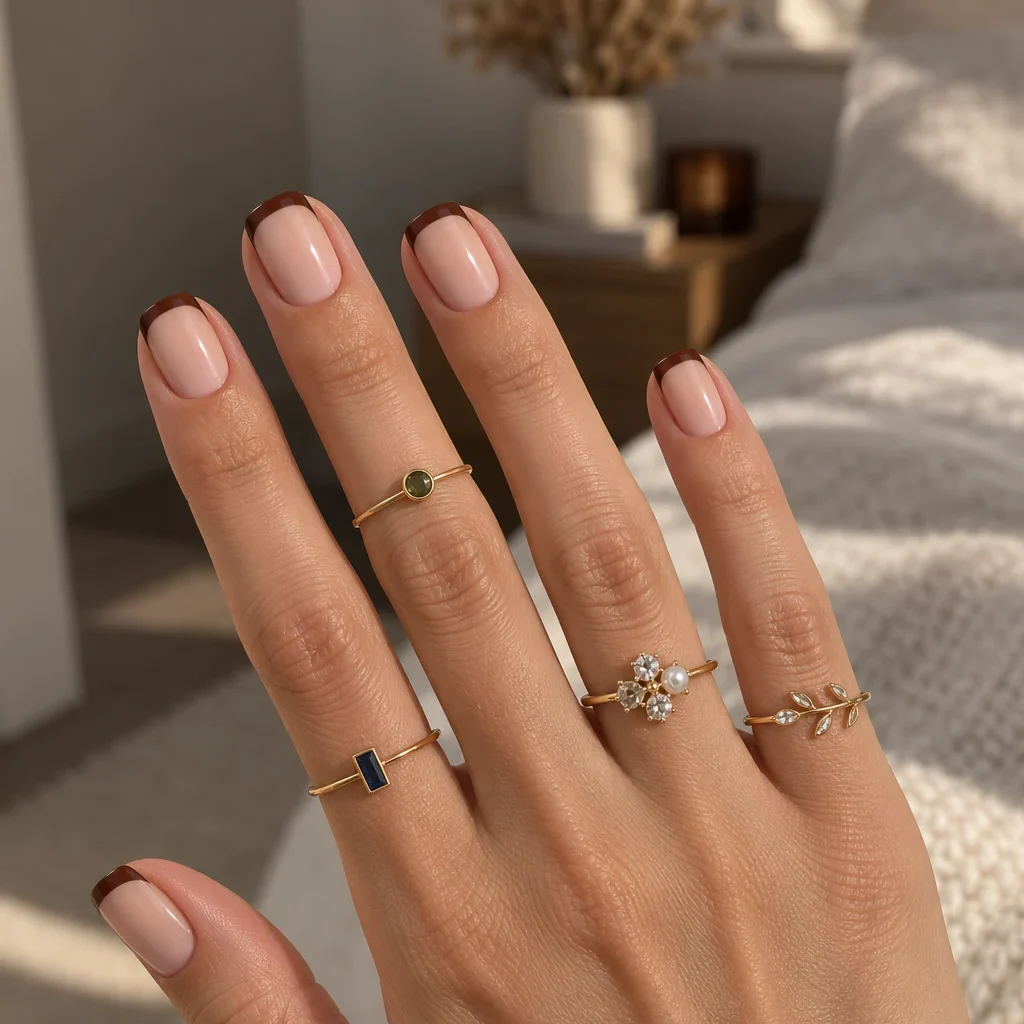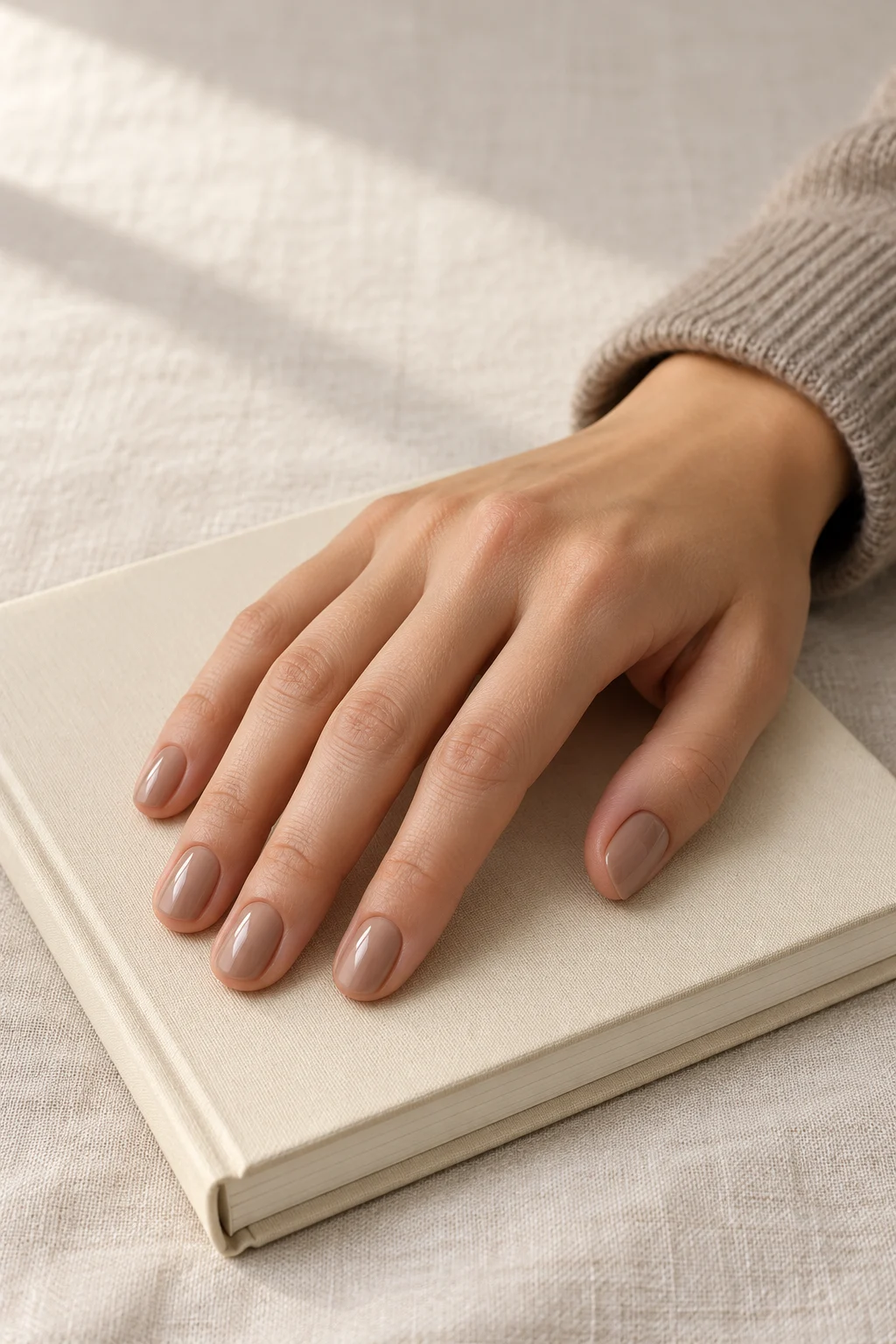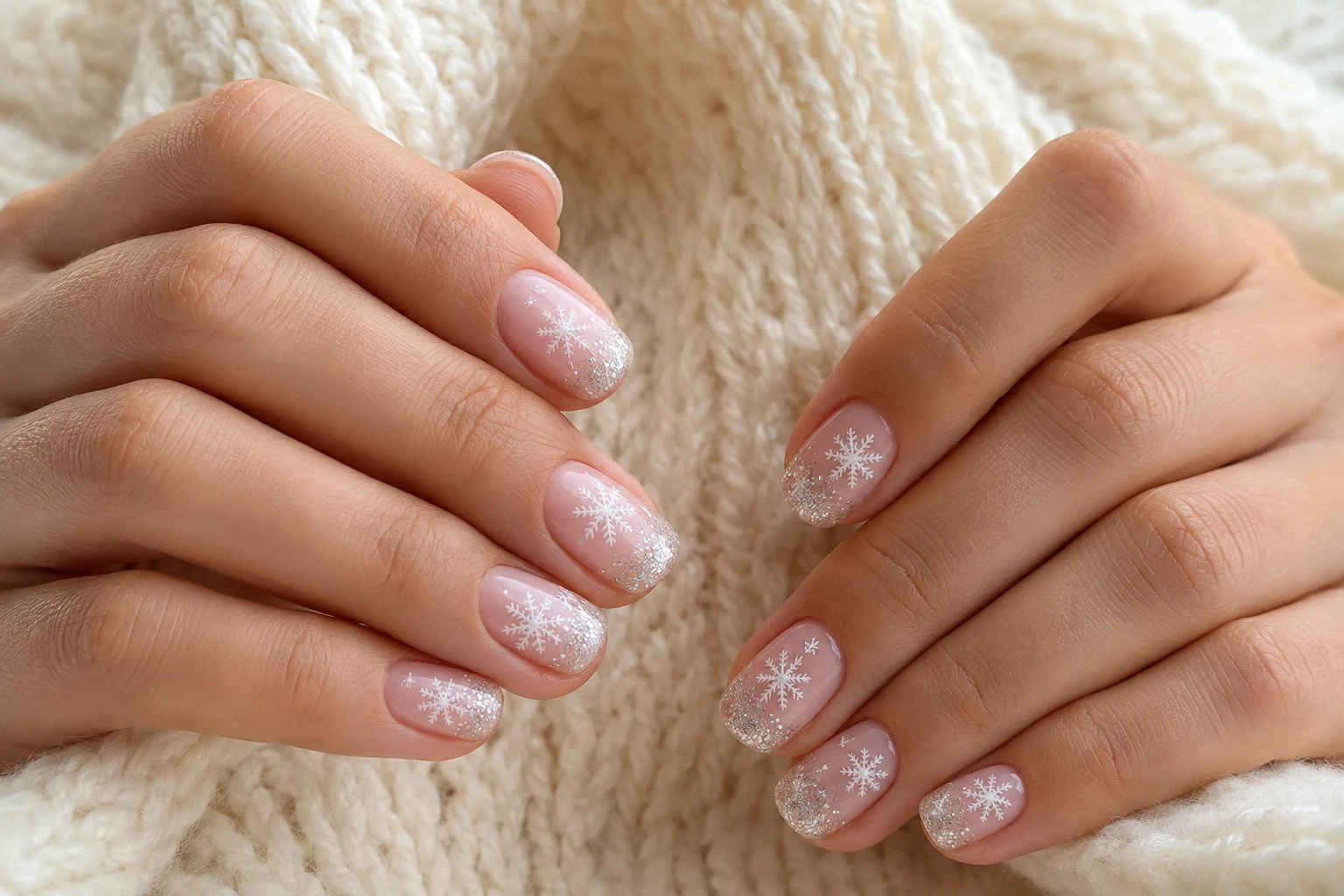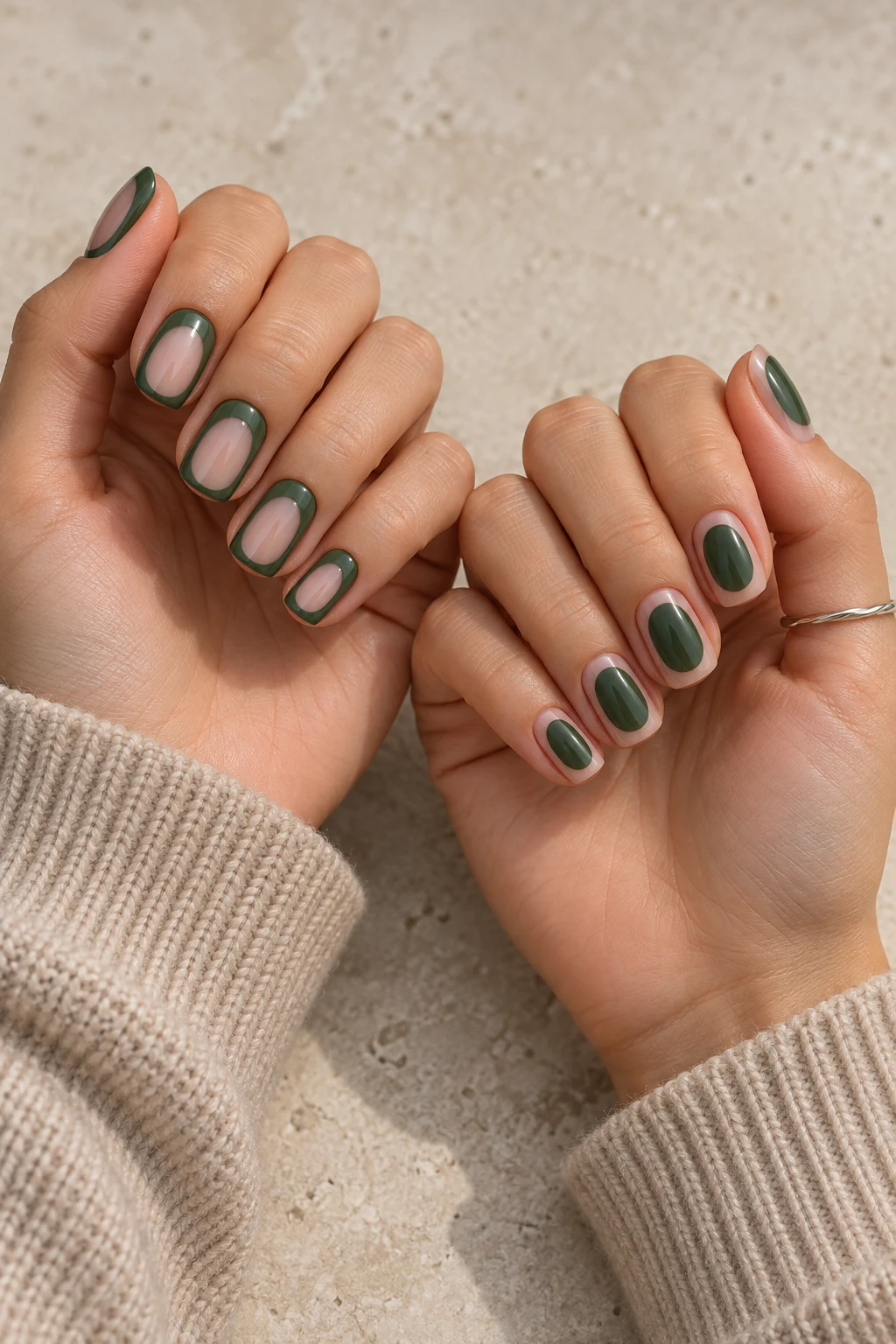
Mismatched nails are becoming more intentional, replacing random combinations with manicures built around controlled contrast. Different colors, finishes, patterns or placements on each hand can create a bold look while still feeling balanced and thoughtfully coordinated.
The trend is not about choosing ten unrelated designs. Successful mismatched manicures follow a visible rule: reverse the colors, change the finish, break a repeated shape or make one hand answer the other. This creates enough surprise to stop the scroll while keeping the finished set cohesive.
Strong mismatched nails should be understandable within a second. When viewers can recognize the connection between both hands immediately, the unusual choice feels intentional instead of unfinished.
Table of Contents
Table of Contents
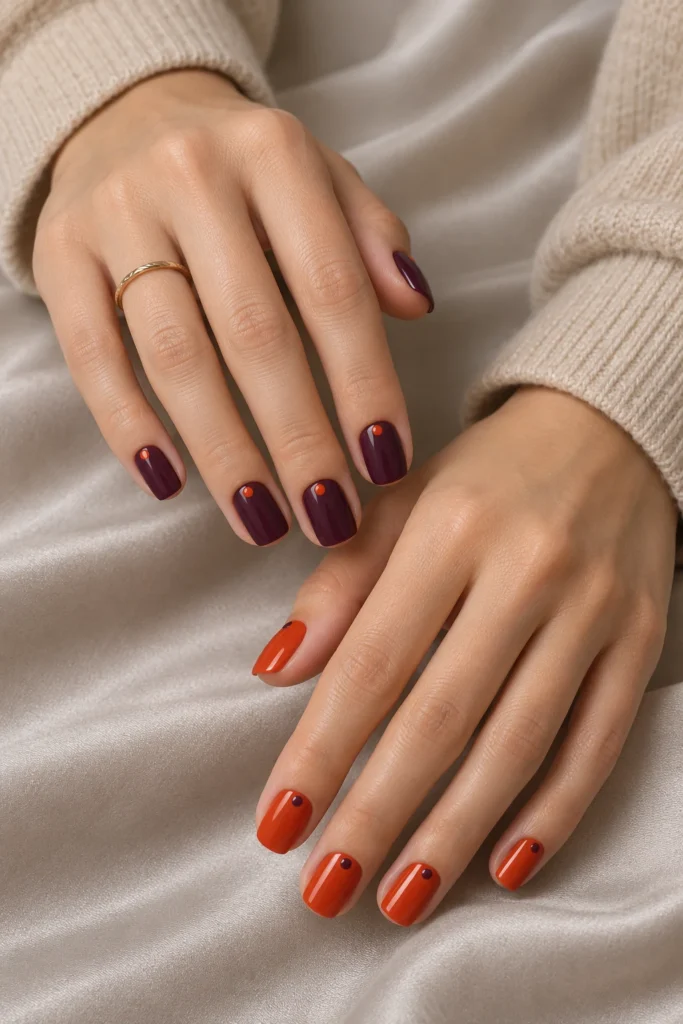
1. Plum and Persimmon Color-Reversal Nails
Paint the left hand glossy plum and the right hand vivid persimmon, then place one small dot of the opposite color near every cuticle. The shared accent connects two contrasting palettes.
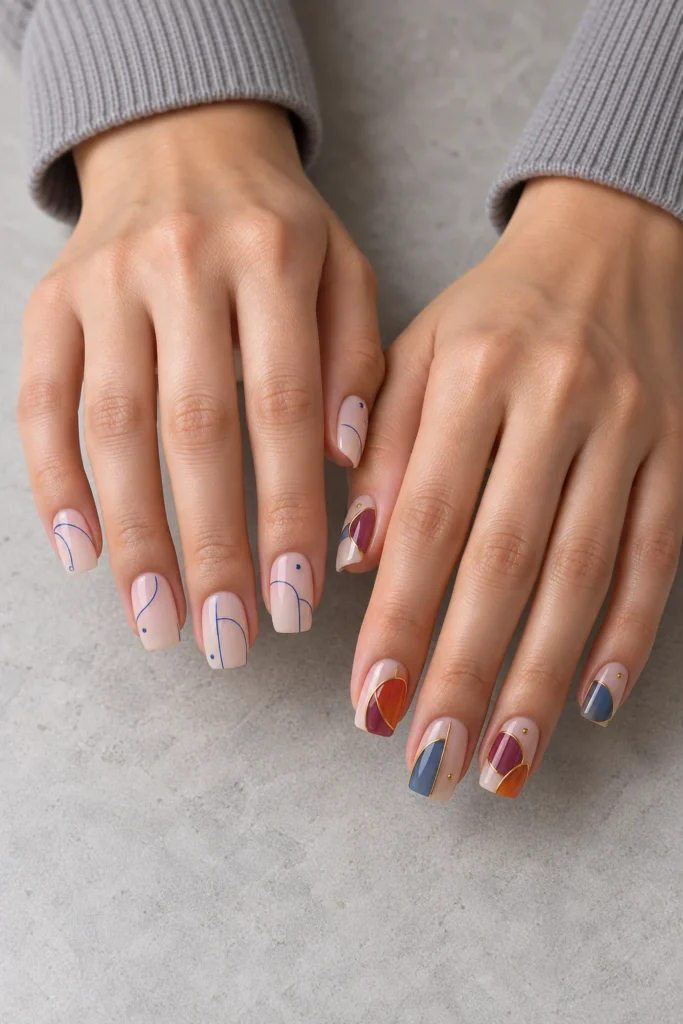
2. Glossy Left and Velvet-Matte Right
Use the same black-cherry shade on both hands but change the surface completely. One reflects like glass; the other absorbs light like velvet, proving that mismatched nails do not require multiple colors.
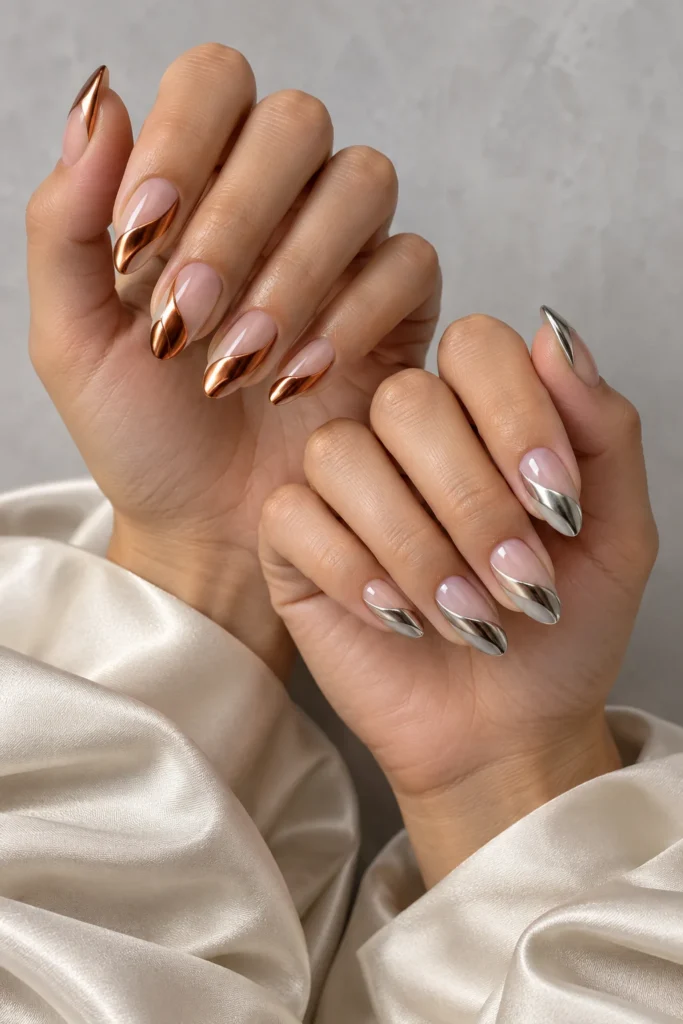
3. Warm Chrome Versus Cool Chrome
Apply molten copper curves to one hand and liquid silver curves to the other over identical nude bases. Repeat the same geometry so temperature becomes the only mismatch.
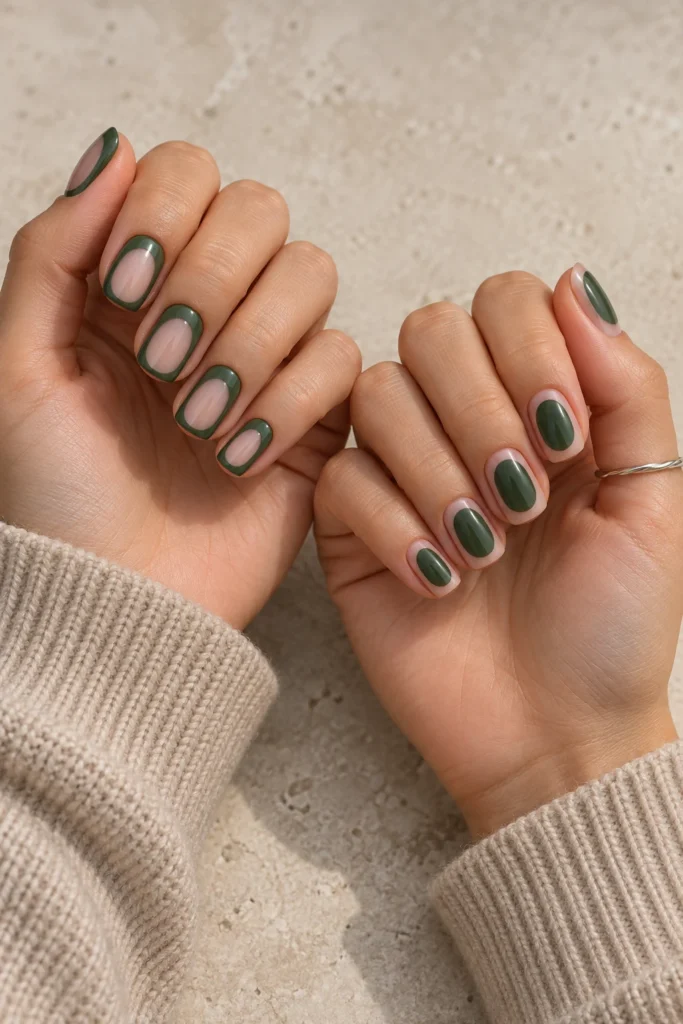
4. Reversed Negative-Space Arches
On the left hand, place color around clear central arches. On the right, fill the arches and leave their surroundings transparent. The manicure reads like a positive-and-negative print.
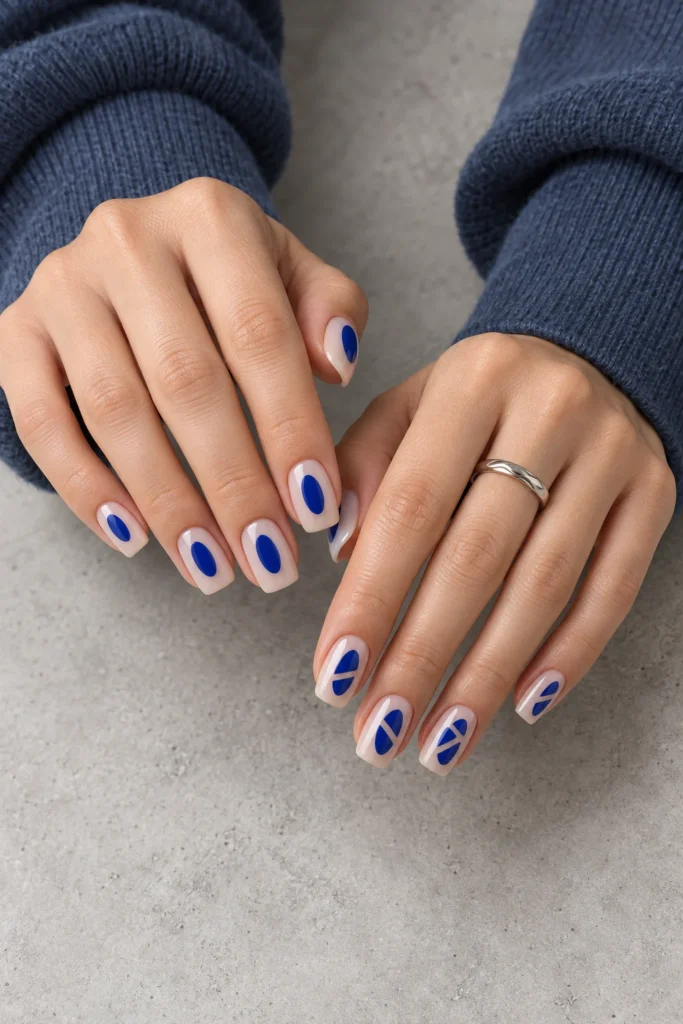
5. Complete Shapes and Glitched Fragments
Paint precise cobalt ovals on one hand and shifted cobalt fragments on the other. A few small missing sections create the purposeful digital-error effect associated with Glitchy Glam.
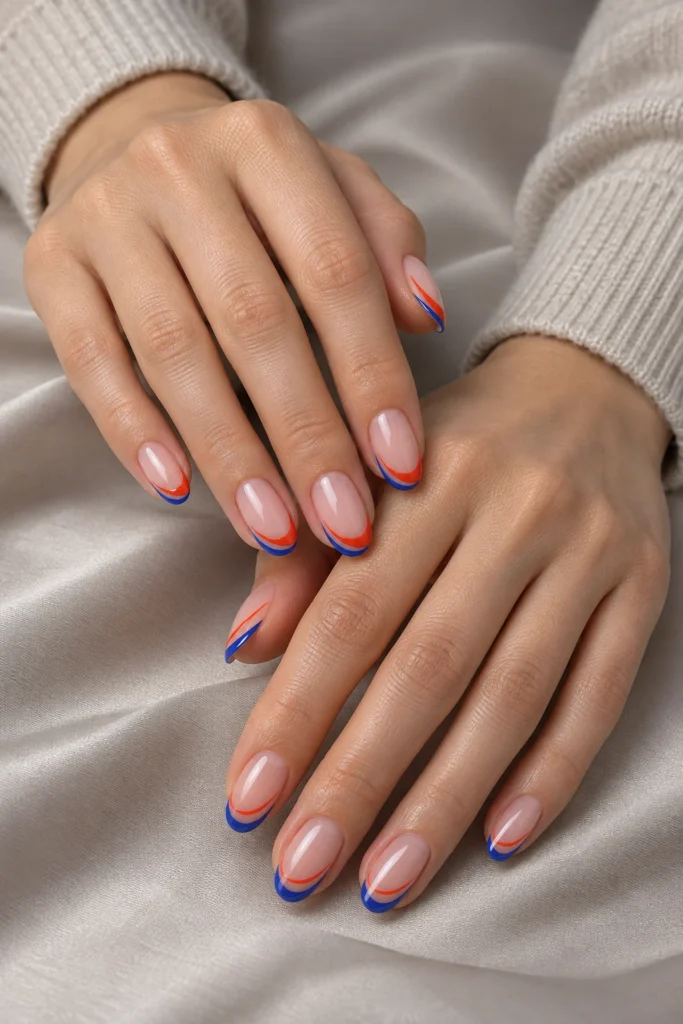
6. Displaced French Tips
Keep one hand’s French tips correctly aligned and move the other hand’s tips slightly sideways or downward. Using the same colors prevents the concept from appearing accidental.
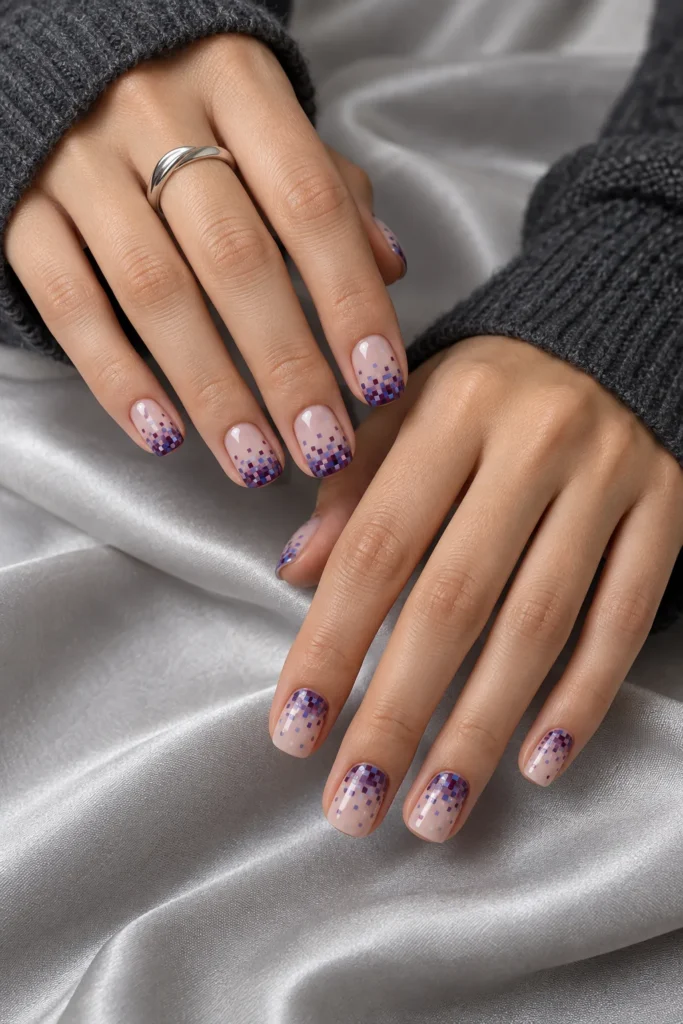
7. Pixel-Fade Nails
Arrange tiny plum and cool-blue squares densely at the tips of one hand and near the cuticles of the other. The reversed fade creates movement when both hands appear in one pin.
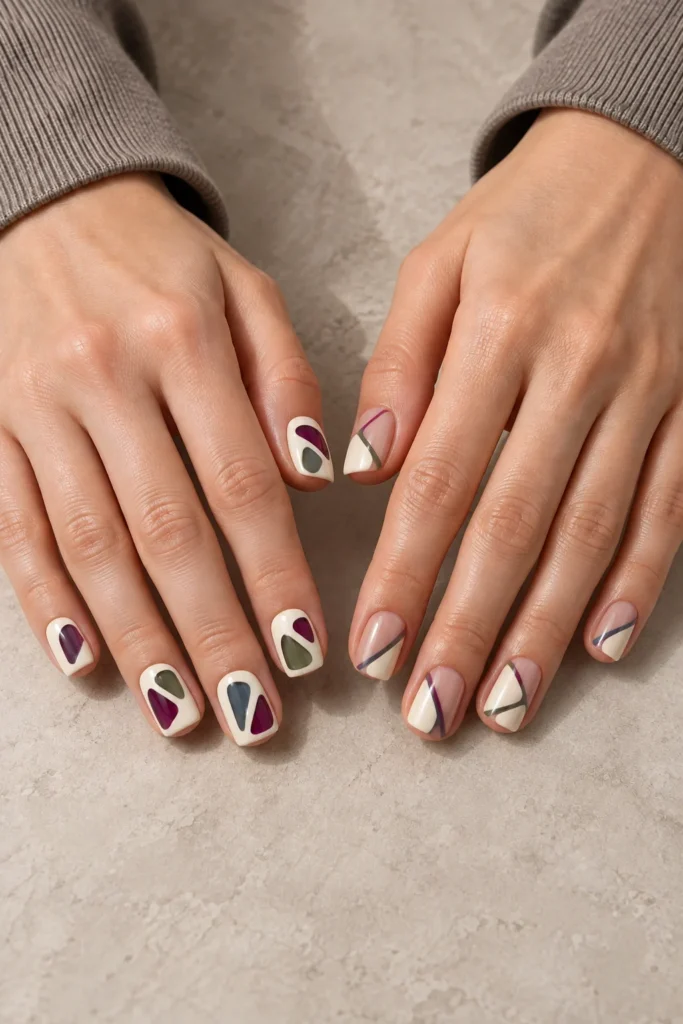
8. Opposite Cat-Eye Directions
Apply the same jade magnetic polish to both hands, but angle the reflections inward on one and outward on the other. These mismatched nails remain sophisticated because the polish and nail shape stay consistent.
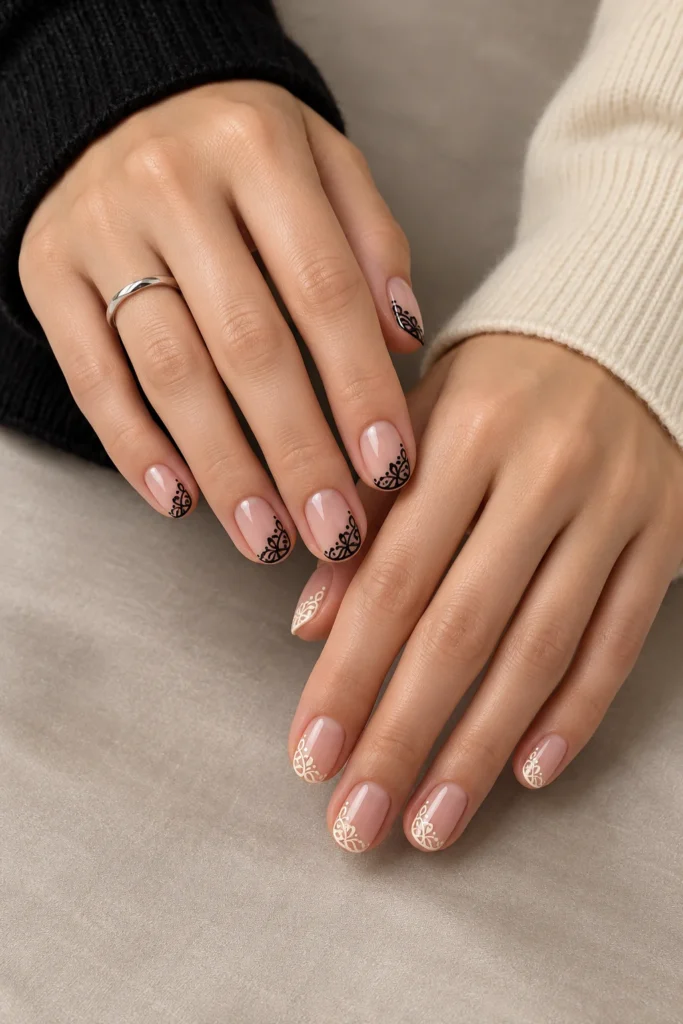
9. Black Lace and Ivory Lace Hands
Repeat one corner-lace pattern in black on the left hand and ivory on the right. This crossover Laced Up trend is especially suitable for romantic editorial pins.
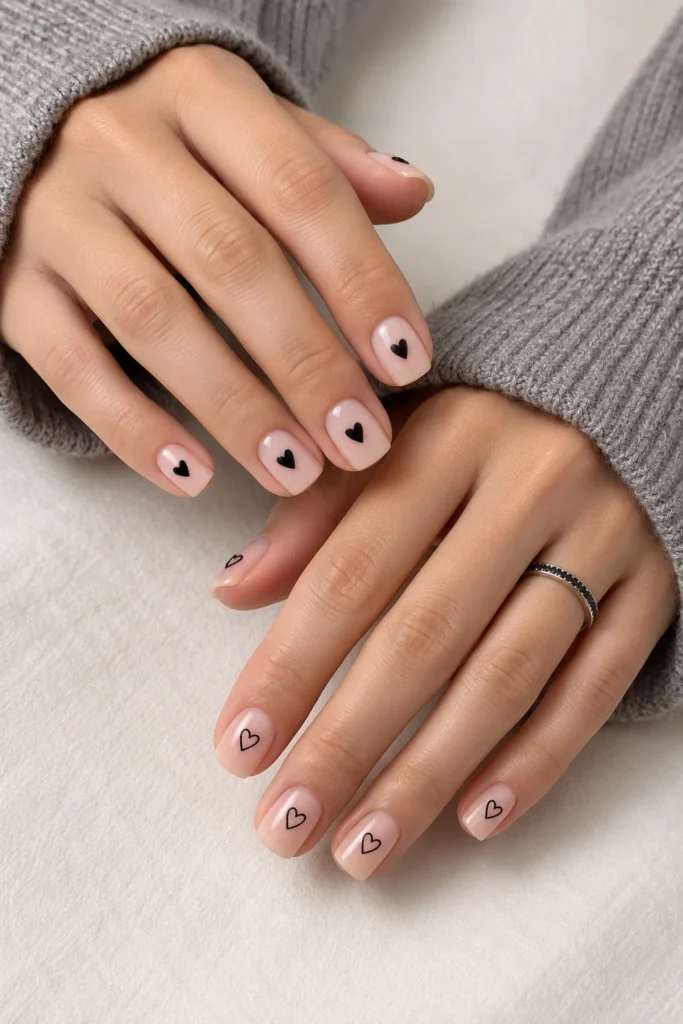
10. Solid and Outline Hearts
Place small filled black hearts on one hand and matching empty black outlines on the other. Slightly imperfect shapes keep the design handcrafted rather than sticker-like.
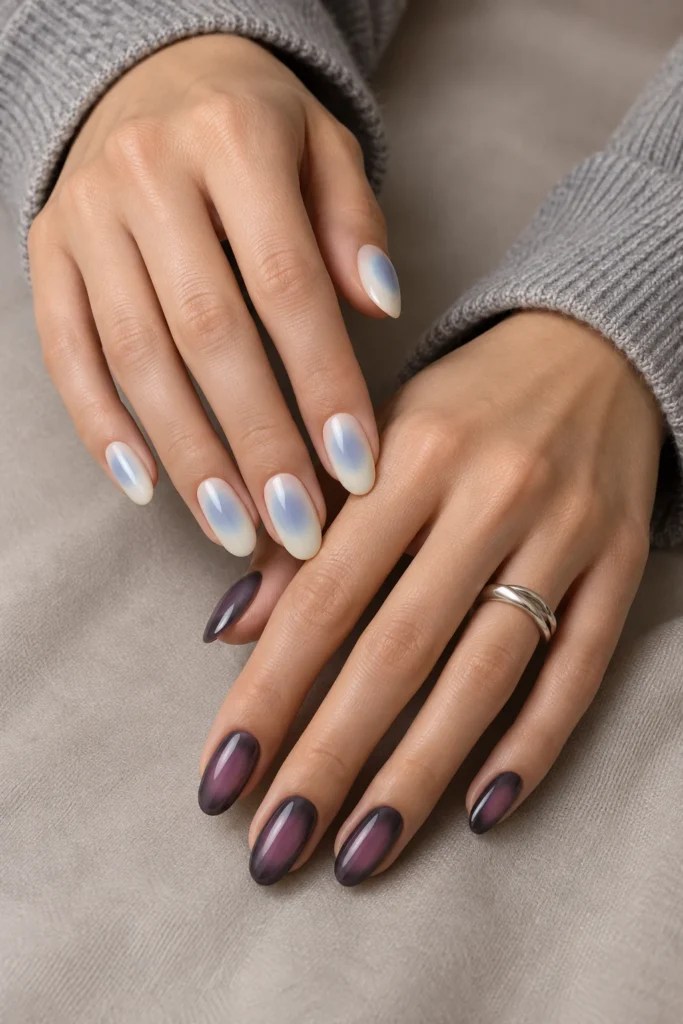
11. Daylight and Midnight Aura Nails
One hand fades from cream into pale blue; the other fades from charcoal into plum. Matching aura placement makes the contrasting time-of-day palettes feel related.
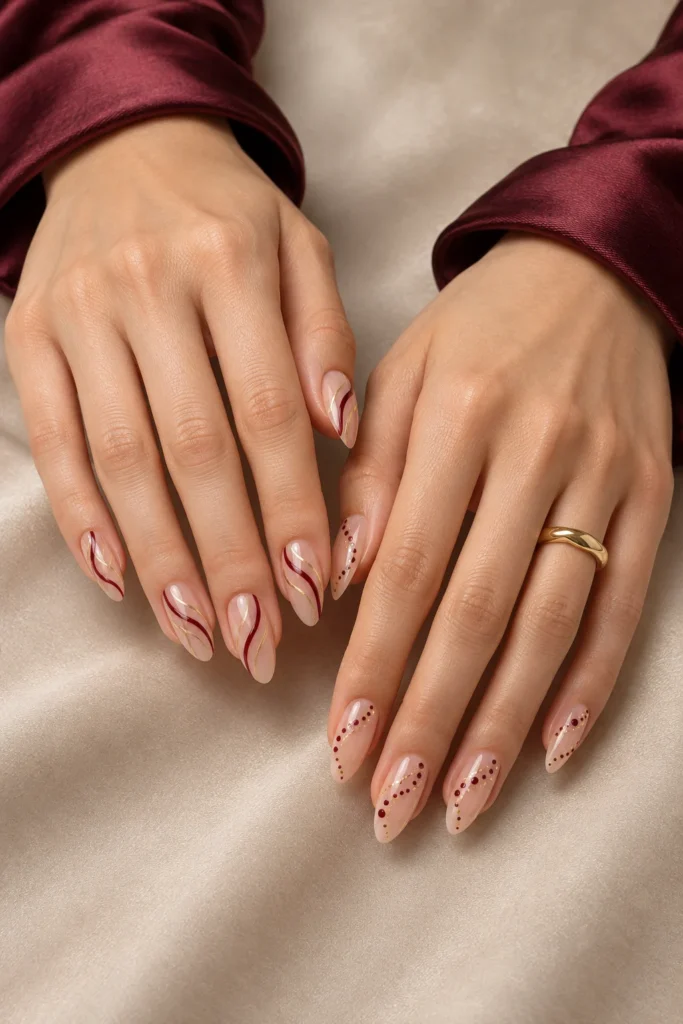
12. Left-Hand Lines and Right-Hand Dots
Use burgundy and gold across both hands, translating the palette into flowing lines on one side and restrained dot constellations on the other. The colors provide unity while the visual language changes.
13. Mirrored Broken-Frame Nails
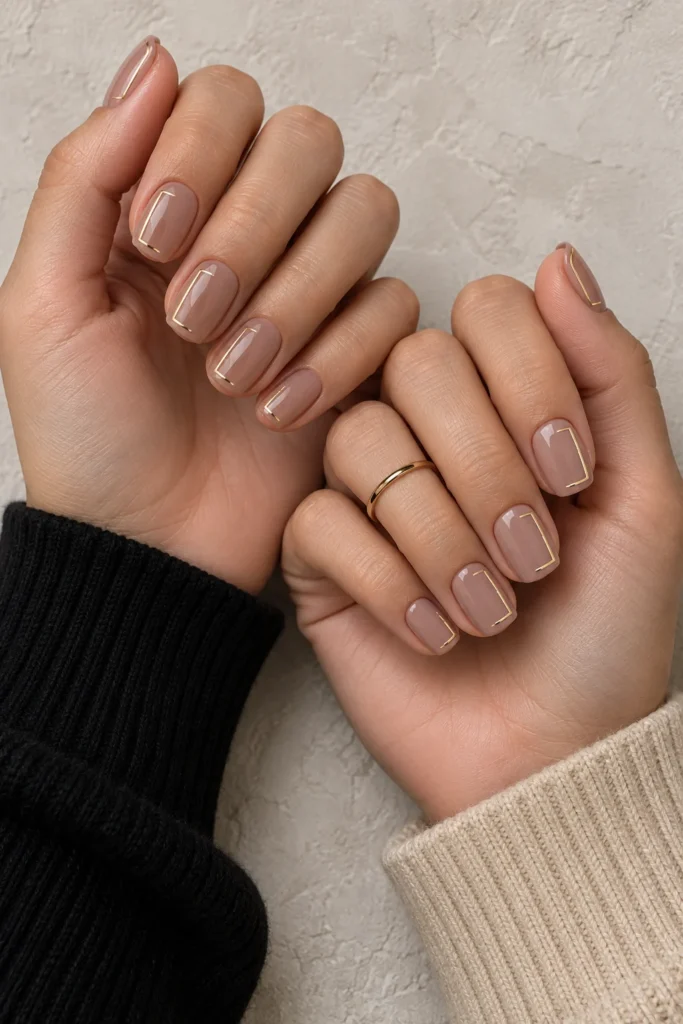
Draw incomplete gold rectangular frames leaning left on one hand and right on the other. The mirrored gaps create controlled imperfection without complex character art.
How to Make Mismatched Nails Look Cohesive
Keep at least two elements identical across both hands: nail shape, base color, finish, motif placement or accent color. Then change one major variable. For example, reverse black and ivory while keeping the same lace pattern, or preserve the polish color while changing the texture.
Another reliable formula for mismatched nails is repetition with interruption. Repeat one motif across nine nails, then alter its position, fill or texture on the tenth. For stronger two-hand concepts, apply the same interruption rule to every corresponding finger.
Two-hand photographs are important for this topic because a single hand cannot communicate the full relationship. Pins should show both wrists and all ten anatomically correct fingers in one natural composition not a split screen or collage.
Photograph mismatched nails against one quiet background and use no more than one ring. The visual contrast should come from the manicure, not from competing sleeves, jewelry or props.
Explore lace nails for more openwork combinations, or connect dark pairings to our Vamp Romantic nails. Our short nail designs collection offers additional practical shapes for everyday wear.
Application and Removal
Map the design on paper before painting so each hand follows the intended rule. Work in thin layers, especially when combining chrome, matte and jelly finishes. Do not peel off gel or acrylic products; follow safe removal directions and consult the American Academy of Dermatology’s manicure guidance when protecting natural nails.
Final Thoughts
The best mismatched nails feel like a visual conversation. One hand can reverse, interrupt or reinterpret the other without becoming random. These 13 concepts turn intentional-imperfection prediction into structured manicures that are innovative, photographable and realistic enough to recreate.